
A Sanctuary For Growing Connections
Sue Kohles stands on the edge of the 145-acre Prairie Pines Nature Preserve, looking out over a landscape that is both a relic of Nebraska’s past and a blueprint for its future. To her, this land is more than just a collection of trees and tallgrass; it is a sanctuary.
As Lincoln continues to grow, Sue knows that one day the city’s development will likely surround this refuge. But thanks to a historic strategic alignment between three local nonprofits and a critical boost from the Lincoln Community Foundation (LCF), Prairie Pines is being anchored as a permanent sanctuary for the community.
A Vision Fulfilled
For years, Sue has served as the manager for Prairie Pines Partners, a nonprofit born from the vision of Walt and Virginia Bagley. The Bagleys, who began planting trees here in 1959, always intended for the land to be a site of conservation and education. But the path to fulfilling that legacy was complex.
The property was previously owned by the University of Nebraska Foundation and managed by the University of Nebraska. When the university decided to divest from the property, a unique provision in the Bagleys’ original agreement was triggered: Wachiska Audubon Society was given the first chance to
take ownership.
"It’s a big move for us," says Mark Brohman, Executive Director of Wachiska Audubon Society. "We are thrilled to continue Walt and Virginia’s vision."
This transition of ownership represented a massive shift in responsibility, moving the daily stewardship of the woodland and grassland habitat directly into the hands of local conservationists.
Strategic Alignment in the Soil
While Wachiska and Prairie Pines Partners jointly manage the land and Prairie Pines Partners focuses on education and public access, a third piece of the puzzle makes the preserve truly unique: Community Crops.
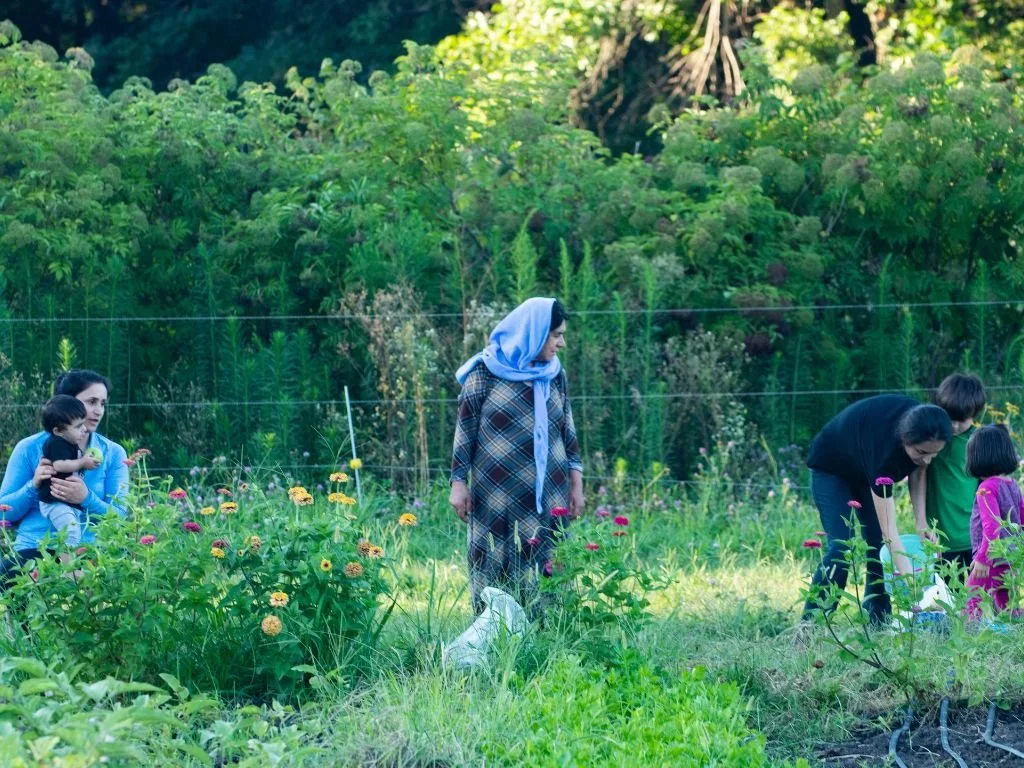
Since 2013, the preserve has hosted an "incubator farm," a concept that allows new farmers—many of whom are refugees and immigrants—to gain land access and business experience.
Megan McGuffey of Community Crops explained that the five-acre farm plot at Prairie Pines is a literal lifesaver for specialty crop producers.
"Land access is extremely expensive and difficult,” McGuffey said. “With an incubator farm, you're sharing resources.”
For the Yazidi community and other new Americans in Lincoln, the farm is more than a business; it is a sanctuary where they can grow culturally significant produce, like Armenian cucumbers, garden cress, and green eggplant.
This partnership allows these farmers to rebuild a cultural food shed right here in Lincoln, selling produce to local Mediterranean markets and feeding their own communities.
The Open Door to Sustainability
Transitioning from a large university system to a co-managed model between independent nonprofits created immediate financial hurdles. To bridge this gap, LCF stepped in with an Open Door Grant.
The funding was vital for:
• Stewardship: Managing 145 acres of habitat, including removing hazardous dead trees.
• Public Access: Mowing trails and maintaining safe recreational spaces for the 3,000 visitors who walk the grounds annually.
• Capacity: Supporting the transition of management responsibilities to ensure the preserve remains stable and secure.
This support is a direct investment in the Connections pillar of Prosper Lincoln, which champions the idea that all people thrive when they are woven into the fabric of their community.
"Our role is to convene, connect, and catalyze," said LCF President Tracy Edgerton.
“We don’t run every program, but we invest in the infrastructure and relationships that allow good ideas to grow—and we support the people closest to the work.”
The sense of belonging at Prairie Pines extends to a robust team of volunteers who treat the land as their own. To Sue, these supporters are as vital to the ecosystem as the trees and tallgrass themselves; they represent the “Connections” pillar in action, proving that a community thrives when its members are personally invested in preserving their shared home.
For Sue, Mark, and the team at Community Crops, the preserve is a testament to what happens when nonprofits stop working in silos and start working in sync.
Together, they are ensuring that even as the city grows around it, Prairie Pines will remain a place where "the wild meets the unwild," and where every resident of Lincoln can find a connection to the natural world.
To learn more, visit LCF.org.
